Data Center Costs
Data centers are driving up electricity bills across the PJM territory. Those costs are unjustly falling on everyday people—but, together, we can change that.
The PJM region has the highest concentration of data centers in the country. These facilities use enormous amounts of electricity and spur expensive infrastructure upgrades, costing the public billions.
The costs of connecting and supplying energy to data centers are passed down to all 67 million PJM customers primarily through capacity markets and transmission upgrades. Here’s how those costs break down:
Capacity Costs
The PJM capacity market operates like an insurance policy for the grid. It’s designed to ensure that there is enough power to serve everyone when there’s an unexpected spike in demand—like in the case of a heatwave or a cold snap, when people use more electricity than usual.
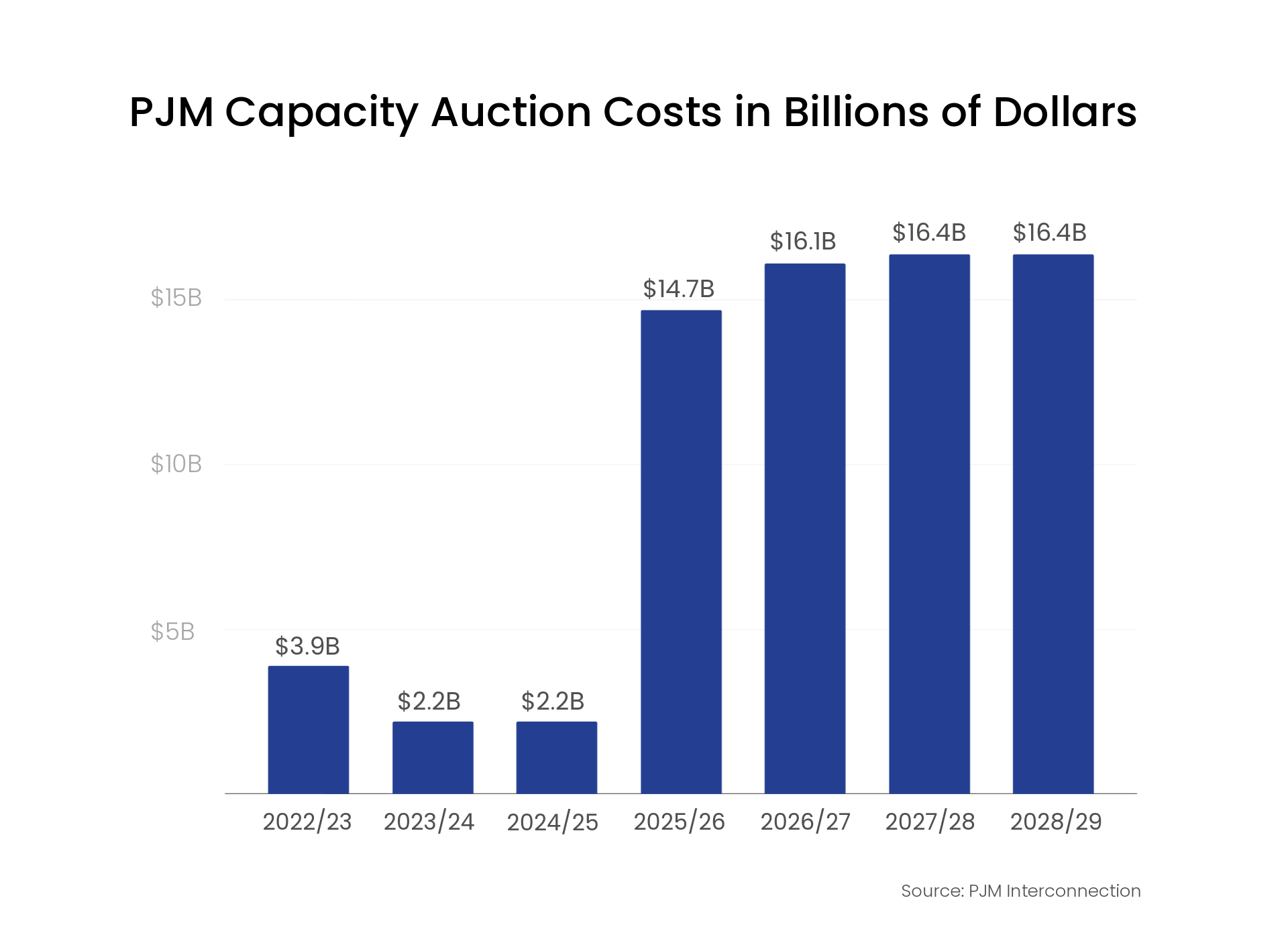
While an insurance policy against blackouts is a good thing, the introduction of data center demand has thrown the market into chaos, with demand rapidly outgrowing supply and driving prices to unprecedented heights.
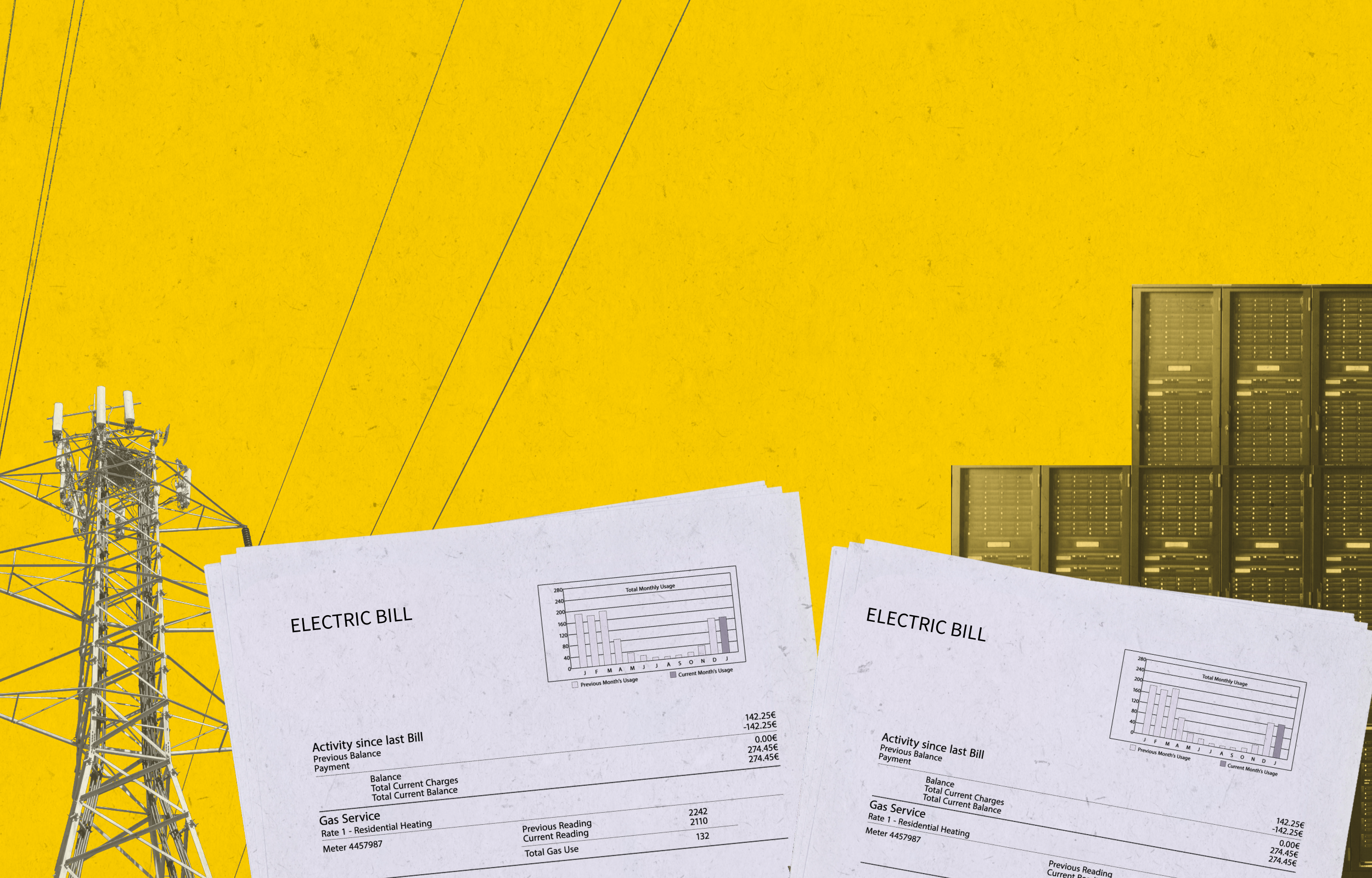
This huge increase in capacity market costs shows up on the utility bills of everyday people across the PJM region. In recent auctions, data centers cost us $24.9 billion—or 46% of the total regional capacity bill.
PJM also needs to put structures in place to weed out data center projects that are purely speculative from those that are actually going to be built. This would benefit customers in two ways:
Protecting them from subsidizing unnecessary distribution and generation system buildout.
Protecting them from paying unnecessary capacity costs. The grid operator uses “load forecasts” to project future electricity demand. But PJM allows utilities to use wildly different approaches to estimate how much capacity they need. Too often a proposed data center is included in a utility’s load forecast even if it has little chance of actually being built. This drives up prices.
Transmission Costs
Data centers not only consume massive amounts of electricity, they also require costly infrastructure to connect their sprawling facilities to the grid.
According to a report published by the Union of Concerned Scientists, PJM customers paid for $4.3 billion the buildout of new transmission lines to connect data centers to the grid. Instead of Big Tech covering the bill for grid upgrades, those costs are borne by other local customers.
How to Protect Consumers from Big Tech
We need to get control over data center costs. According to PJM, data centers account for over 90% of projected electricity demand growth through 2030, or 30GW of additional power. Some of that demand is speculative, but speculative or not, we will keep paying for it–unless something changes.
Both PJM and states can take action to protect residents from bearing the burden of Big Tech’s data center costs.
States
Require data centers to “Bring Your Own New Clean Energy” (BYONCE)
Create large-load rate classes
Institute oversight of utility load forecasts
Assign data-center related capacity costs to data centers
To learn more about what your state can do, download our Toolkit on Electric Affordability Legislation for Policymakers in PJM States.
Require data centers to bring their own generation
Remove data centers from the capacity market
Mandate curtailment of data center power before pre-emergency grid load management measures
Resources: